


The Beautiful Bug You’re Supposed to Stomp

Updated for 2026

The spotted lanternfly (Lycorma delicatula) is an invasive planthopper first detected in the U.S. in 2014. There is one generation per year: eggs overwinter, nymphs appear in spring, and adults are most common July–September. Adults are about 1 inch long and egg masses usually contain 30–50 eggs in a putty-like coating. Immediate homeowner actions: kill adults on sight, scrape and destroy egg masses with alcohol or soapy water, inspect gear before travel, and report sightings to state authorities and mapping services to help slow spread.

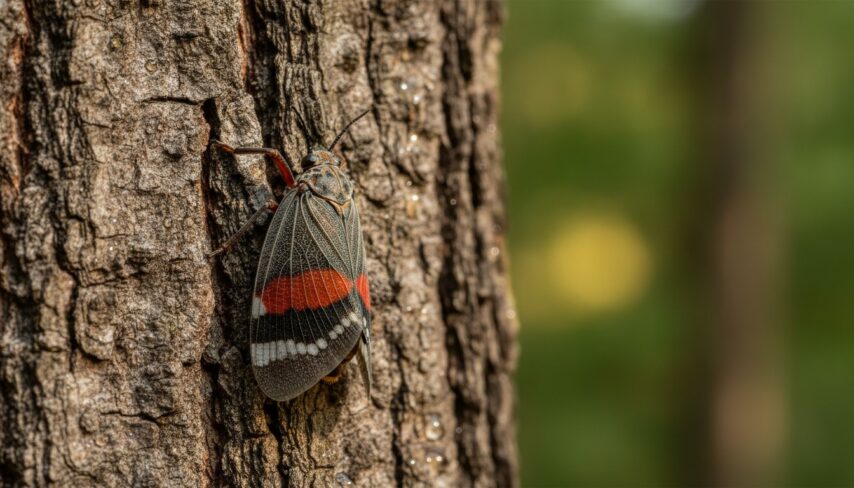
macro-spotted-lanternfly-wings

A flash of red and black on a late-summer tree trunk is often a spotted lanternfly, an invasive insect that has spread from its first U.S. confirmation in 2014 to many states since then. Because adults and egg masses readily hitchhike on vehicles, trailers, firewood, and outdoor equipment, homeowner actions can make a measurable difference in regional containment efforts.

This guide distills extension and federal guidance into clear, practical steps you can use at home to identify, remove, and report spotted lanternfly so you can protect your yard, neighborhood, and local agriculture. Read each section and follow the seasonal timing and reporting steps so your efforts align with local programs and verify with your state extension for any differences in recommendations.

Quick facts you can quote

Adults are approximately 1 inch (about 25 mm) long with pale gray-brown forewings covered in bold black spots; when wings are opened the red-orange hindwings with black bands and white patches are diagnostic.

Egg masses typically contain 30 to 50 eggs packed in a putty-like coating and can overwinter on almost any outdoor surface, making them frequent hitchhikers on vehicles, trailers, firewood, and outdoor gear.

State extension services and experts recommend killing adults on sight and destroying egg masses as practical immediate steps homeowners can use to reduce local spread.

Identification: fast field ID so you act quickly

Adult spotted lanternflies are about 1 inch long with pale gray-brown forewings covered in bold black spots. When the forewings are opened you will see vivid red-orange hindwings with black bands and white patches that are diagnostic.

Nymphs pass through several instars in spring: early instars are glossy black with white spots, and later instars develop red or pink coloration with white spots before the final molt to adult.

Egg masses appear as mud- or putty-colored strips roughly 1 to 1.5 inches long and are often mistaken for bird droppings or tar. Eggs can be laid on almost any outdoor surface and overwinter until spring.

Why spotted lanternfly matters and what the damage looks like

Spotted lanternflies feed by sucking sap from trunks, stems, leaves, and fruit. They excrete sticky honeydew that encourages sooty mold growth, which reduces fruit quality and photosynthesis and creates messy residues on patios and vehicles.

Repeated heavy infestations can weaken and eventually kill young or already stressed trees. Vineyards and orchards can suffer reduced yields and higher management costs when infestations are not controlled.

Tree-of-heaven (Ailanthus altissima) is a preferred host and commonly fuels local outbreaks; reducing or treating nearby Ailanthus can lower local population pressure and complement other control steps.

Seasonal timing: when to inspect

Egg masses are easiest to find from late fall through early spring after they are laid, because they remain visible on smooth surfaces until they hatch in spring; this window is ideal for focused inspections.

Nymphs hatch in spring and progress through instars in late spring and early summer. Adults appear and peak from July through September when mating and egg laying occur.

Inspect sunny trunks, canopy clusters, and smooth horizontal surfaces such as railings, grills, patio furniture, vehicles, trailers, and firewood year-round, but pay extra attention during the seasonal windows described above.

Kill on sight: safe, effective steps you can use right away

If you find an adult on a hard surface, quickly step on it with a sturdy shoe or use a rigid object to crush it on a firm surface to prevent escape, then place the remains into a sealed bag for disposal. Crushing on a firm surface is fast and effective and requires no chemicals.

If you prefer to collect rather than crush, capture the insect in a jar or container and drown it in soapy water. Take clear photos first if you want documentation for reporting. Wear disposable gloves if desired and avoid handling crushed insects directly; seal crushed adults and debris in a zippered plastic bag and place the bag in household trash, then wash and sanitize tools and surfaces used for handling.

Killing adults on sight is widely recommended by state extension services and USDA as part of containment; see local guidance such as state recommendations for details.

Egg masses and stopping hitchhiker spread

Egg masses can be laid on almost any outdoor surface, from railings and undercarriages to grills, patio furniture, firewood, boats, and trailers, so inspect these areas carefully before travel or storage and pay particular attention to smooth, horizontal surfaces and tree trunks, especially Ailanthus.

Use a rigid plastic scraper or an old credit card to remove each egg mass into a disposable bag or jar. Scrape the mass into the container rather than brushing it off to avoid leaving eggs behind; wear disposable gloves if desired. After scraping, pour 70 percent isopropyl alcohol or a generous amount of hand sanitizer over the collected eggs to ensure destruction, or submerge the eggs and tools in soapy water and allow them to sit.

Seal and dispose of bags or jars in the trash and clean tools thoroughly afterward. If you find egg masses on a vehicle, clean roof racks, wheel wells, and undercarriage areas before traveling to prevent accidental spread.

Longer-term yard management and when to call a professional

Longer-term control is most effective when you combine cultural, mechanical, and, when appropriate, chemical methods. Reduce nearby Ailanthus where practical, increase plant diversity to lower host concentration, and prune heavily infested branches.

Sticky bands can reduce nymph migration if installed with predator guards and monitored frequently, because they can otherwise trap birds, small mammals, and beneficial insects; follow extension instructions for correct installation and consider alternatives where wildlife risk is high.

For heavy infestations, high-value trees, or orchards, contact a licensed applicator to apply labeled, targeted insecticides. Always follow label instructions and state extension recommendations to protect pollinators, wildlife, and your neighbors.

How to document and report spotted lanternfly sightings

Take clear photos that show the whole insect or egg strip plus at least one close-up of distinctive markings, and include a photo for context showing the attachment surface to help verifiers and map the find.

Record the date, a full street address or GPS coordinates, and a brief note of the host or surface (for example, “egg mass on picnic-table rail”) before submitting a report. Report sightings to your State Department of Agriculture reporting portal or the USDA National Invasive Species Information Center and submit the observation to mapping platforms such as EDDMapS and iNaturalist to support early detection and coordinated responses.

Keep copies of your photos and follow up if your state issues confirmation or further instructions, because follow-through helps local programs track spread and prioritize responses.

Action checklist and next steps

Before you travel or store gear, inspect and clean roof racks, wheel wells, grills, awnings, patio furniture, and firewood, and scrape and destroy any egg masses found using 70 percent isopropyl alcohol or soapy water. For more guidance on pre-trip cleaning, see Before you travel resources.

Kill adults or nymphs on sight and seal them in a bag for disposal; photograph suspicious finds for reporting and submit observations to your state agency and to EDDMapS or iNaturalist to support mapping and verification.

Consider reducing Ailanthus presence near your property to lower local pressure, and make a seasonal routine of “photograph, remove or destroy, report, and repeat” so your actions join those of neighbors to slow the spread. If you are uncertain about large infestations or treatments, consult your state extension or a licensed applicator for guidance tailored to your locality.

Common Questions

Do spotted lanternflies bite or sting humans? No, they do not bite or sting people and are not considered directly harmful to human health, although their presence can be a nuisance on porches and patios.

Can pets be harmed by lanternflies? Pets are unlikely to be directly harmed by lanternflies, but keep pets away from treated plants and prevent them from ingesting large amounts of honeydew or sooty fruit; always follow pesticide label precautions to protect pets.

Will one lanternfly kill my tree? A single adult will not kill a mature tree, but repeated heavy infestations over multiple seasons can weaken and potentially kill susceptible or already stressed trees.

When should you call a professional? Call a licensed applicator for high-value trees, small orchards, or repeated heavy infestations so that labeled, targeted treatments are applied safely and legally, and check with your state extension for approved options and timing.