


When Yellow Jackets Crash the Cookout

Updated for 2026

Late-summer yellow jacket activity peaks in August and September when colonies reach their largest worker numbers, which explains sudden swarms at backyard gatherings. Mature colonies commonly contain 1,000 to 5,000 workers at peak, so a single forager can quickly recruit many nestmates if attracted to your food or drinks. Yellow jackets seek both protein and sugar, meaning grills, sodas, fruit, and open trash are all strong attractants. DIY removal has real limits depending on nest location and size. For immediate safety, stay calm, move people indoors, cover food and trash, follow allergy guidance including epinephrine for suspected anaphylaxis, and call a licensed professional for structural or large nests.

yellow-jacket-on-soda-can

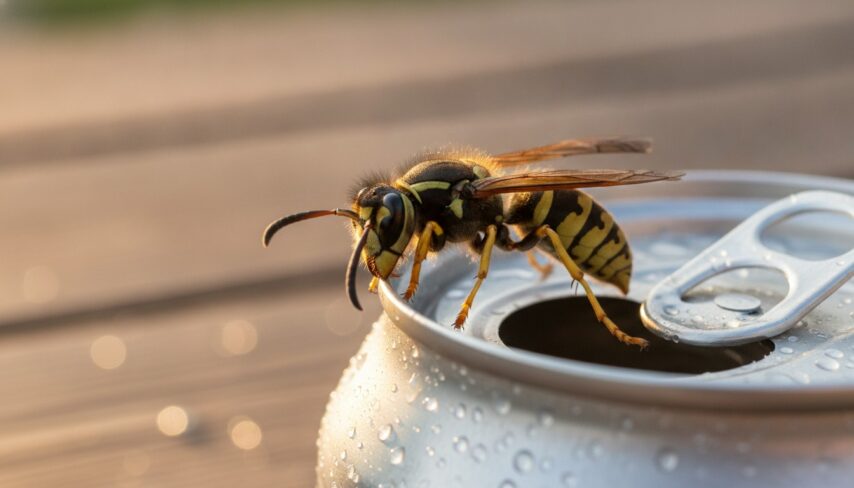
Imagine a hot grill, children splashing at the pool, and a yellow jacket landing on a soda can, drawing the attention of others. Late in the season colonies are provisioning larvae and producing new queens, so workers forage intensely for both sugar and protein, right when your party is busiest.

Because foragers fly directly between food sources and the nest, a disturbed worker can release alarm pheromones that recruit others, turning a single visit into an escalating swarm. This article explains the seasonal biology behind the surge, how to spot nests early, what to do immediately when yellow jackets appear, proven prevention steps, realistic DIY limits, and when you should call a licensed pest professional.

Why late-summer yellow jackets target your cookout

As the season progresses, colonies shift priorities from growth to reproduction, and workers increase foraging to feed developing larvae and newly emerging queens, which drives their late-summer intensity. They need proteins for larval development and sugars for flight, so both a grilled burger and a sugary drink can be irresistible, and repeated flights between food and the nest create clear flight lines you can observe.

Disturbing a forager, by swatting or sudden movement, can trigger alarm pheromones that rapidly recruit other workers to defend the food source, and because mature colonies may number in the thousands, a few attracted foragers can turn into many. Understanding this behavior helps you focus prevention on reducing attractants and taking calm, deliberate action when yellow jackets appear.

How to spot a nearby nest before it ruins the party

Watch flight paths quietly from a safe distance and look for repeated trips to a single point, which is the most reliable sign of a nest, with workers often disappearing into ground holes, vents, eaves, or deck posts.

Activity typically peaks in the mid- to late-afternoon and falls sharply at night, so observing during the day without provoking the colony often reveals a flight line you can mark and avoid. Common nest locations include shallow underground burrows, wall voids, attics, eaves, and timber elements like deck posts, and consistent entry and exit at one spot is a clear cue to steer clear.

Deliberate observation is safer and more effective than poking around, which is how homeowners commonly discover nests only after someone is stung.

Immediate safety steps when yellow jackets crash the cookout

When foragers arrive, remain calm and minimize recruitment by avoiding sudden movements and never swatting at insects, since crushed individuals and abrupt motion release alarm pheromones that draw nestmates.

Calmly gather children and pets and move people indoors or into a vehicle while covering food, drinks, and trash, because slow, deliberate movement reduces the chance of provoking an attack. If someone is stung, clean the site with soap and water, apply ice for 10 to 15 minutes to reduce pain and swelling, and consider an oral antihistamine for moderate itching according to product labeling, while watching closely for signs of anaphylaxis.

If multiple people are stung or the colony advances into active attack, seek emergency medical care promptly, and follow epinephrine guidance for suspected anaphylaxis as recommended by medical authorities.

Food, trash, and pool strategies to reduce attraction

Keep food and drinks covered when not being served and use lidded beverage dispensers or opaque cups to limit attractive scents and visible sugar, which will reduce the number of curious foragers.

Place trash cans downwind and well away from seating and serving areas, use tight-fitting lids or sealed bags, and empty full bins promptly to prevent sustained attraction, while wiping sticky residues from pool edges and toys immediately.

Avoid leaving open bowls of fruit or candy outdoors and consider single-serve or lidded desserts where practical; situate grills and buffets away from guest areas and place any commercial traps 30 to 50 feet downwind to draw wasps away from people. These simple steps lower the odds that yellow jackets focus on your food and give you more control over where they forage.

DIY control, what you can, should, and shouldn’t try

Prioritize year-round prevention through sanitation, sealing openings, and removing debris and potential nesting sites, since preventing nests is far safer and more effective than late-season removal.

For small, accessible ground nests a trained homeowner may consider a nighttime treatment using a correctly labeled product and appropriate personal protective equipment, because night applications reduce worker activity and exposure. Do not attempt to remove nests in wall voids, attics, or other inaccessible locations, and avoid quick “spray and run” tactics with consumer aerosols against large colonies, as those methods often fail and can push workers into living spaces.

If nests are structural, large, adjacent to doors or play areas, or if anyone in the household has a sting allergy, call a licensed pest professional rather than risking an inadequate DIY attempt.

What professional yellow jacket removal looks like and why it is worth it

Licensed technicians begin with a careful inspection to locate nests and flight lines using flashlights, probes, and sometimes thermal imaging or other tools to find hidden colonies safely, which reduces risk to occupants.

Professionals apply targeted, labeled dusts or liquids at times and in ways that minimize worker escape and defensive behavior while wearing proper personal protective equipment and following industry safety protocols. Follow-up typically includes sealing entry points, advising on structural repairs or exclusion, and scheduling return visits or offering a warranty during peak season to ensure the problem is resolved.

Call a professional immediately if anyone has a known anaphylactic sensitivity, if nests are inside structures, if infestations recur year after year, or if nests are next to high-traffic areas.

Preventing a return next season, a seasonal action plan

Take seasonal actions now to reduce the chance of large colonies later by starting with exclusion work in winter and early spring, sealing soffits, eaves, foundation cracks, and screened vents where gaps of 1/4 inch or larger can be closed with caulk or mesh to block queens.

In late spring, monitor flight lines for early queen activity and consider a professional inspection if you spot concentrated flights, because treating small founding sites early is more effective than dealing with a late-season explosion. Maintain year-round habits such as trimming grass, removing wood and brush piles, keeping compost and trash sealed, and not leaving pet food outdoors overnight, since these steps remove attractive habitat and food resources for workers.

Consistent attention to these tasks will significantly lower the odds that yellow jackets choose your yard as a nesting site next summer.