


The Flies Have Taken Your Kitchen

Updated for 2026

Common kitchen pests you will most often see are fruit flies (Drosophila spp.), drain or moth flies (family Psychodidae), and house flies (Musca domestica). Adult sizes typically range from about 1/8 inch (3-4 mm) for fruit flies, to 1/16-1/4 inch (2-6 mm) for drain flies, to 1/4-1/2 inch (6-12 mm) for house flies. Fruit flies can complete a life cycle in roughly 8-14 days at 77 F (25 C); expect visible adult reductions within hours after emergency sanitation and elimination in 1-2 weeks when breeding sites are removed; call a pro if infestation persists beyond 14 days or breeding sites are inaccessible.

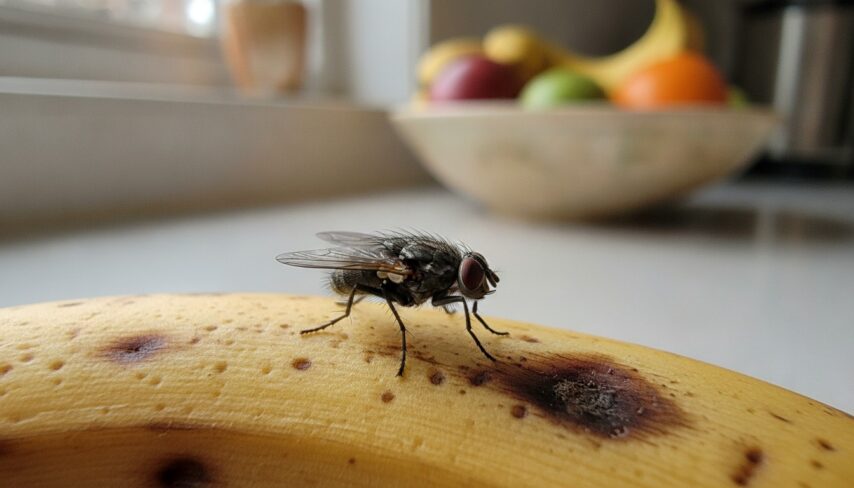
macro-fruit-fly-on-banana

When you notice a cloud of tiny flies around your fruit bowl, sink, or entryways, the culprit is usually one of three species: fruit flies, drain or moth flies, or house flies — distinct from sawflies in appearance and biology.

Each species has distinct size, behavior, breeding sites, and remedies, so a quick visual ID helps you focus inspection and treatment where it will work best. This guide explains how to recognize the culprit, where to inspect in your kitchen and surrounding areas, which mechanical and chemical steps actually eliminate breeding sites, and when to call a licensed pest professional. Follow a targeted plan and you can avoid repeated, ineffective attempts.

Spot the culprits: quick ID guide

If you are seeing very small tan or brown flies about 1/8 inch long that fly in short, jerky bursts, you are likely dealing with fruit flies, and you will usually find them clustering on ripening or fermenting produce, in open bottles, or near compost. Drain or moth flies are much fuzzier, with broad hairy wings and a slow, fluttering flight, and they rest on vertical surfaces near drains where larvae develop in moist organic film. Larger, faster house flies around 1/4 to 1/2 inch long are strong fliers and often indicate sanitation issues around garbage or pet waste; because they are efficient mechanical vectors of bacteria, you should prioritize hygiene when you find them indoors.

Use size, wing texture, flight pattern, and congregation points to guide your inspection.

Where they hide: common and overlooked breeding sources

Fruit flies breed in overripe fruit, produce drawers, rotting vegetables, sticky spills, spent beer or wine bottles, indoor compost and damp paper towels, and recycling bins or dirty sinks are common but often overlooked reservoirs. Drain flies develop in the slimy biofilm that accumulates in P-traps, sink overflow channels, dishwasher seals, floor drains and condensate pans, so any place with chronic moisture and organic film can host larvae. House flies reproduce mostly outdoors in garbage, animal waste, or carcasses and enter your home through gaps, torn screens, or open doors, although once inside they rest on counters and walls.

Focus your search on these predictable sites, and remember that a single neglected source can sustain a population.

Inspect like a pro: stepwise detection that leads to a fix

Begin by observing where adults gather and follow their flight paths to narrow the likely source, whether that is fruit, a sink, or an entryway. Keep a flashlight, a small inspection mirror, clear tape, a sticky card and a drain brush handy so you can check under and behind appliances, inside recycling bins, under rubber seals and around the P-trap; a simple jar trap with apple cider vinegar and a drop of dish soap will confirm a fruit-fly source quickly.

Wipe suspicious surfaces with a paper towel to look for larvae, sticky residue or slime, and be prepared to lift access panels or remove a P-trap if activity indicates a drain source. Systematic inspection narrows treatments and avoids wasted effort.

Emergency actions: what to do tonight to stop the swarm

Start immediate sanitation by removing or bagging overripe fruit and compost, capping open bottles, emptying garbage and recycling liners, and rinsing containers to remove residues that attract flies. Use a fly swatter, sticky traps or jar traps to knock down adults quickly, and avoid aerosol foggers because they can scatter insects into hidden breeding sites rather than solving the problem.

Increase airflow with a fan over the prep area and close doors or repair torn screens to reduce new entries, knowing these steps reduce adult numbers fast but do not eliminate larvae in breeding sites. Plan mechanical cleaning of suspected breeding sites the same day to interrupt the life cycle.

What actually eliminates them: source removal first

Killing adults only treats the symptom, and the long-term solution is removing eggs and larvae by eliminating the organic material that supports them. For fruit flies, discard and refrigerate ripe produce, clean pantry shelves and sanitize bins and bottle caps, because tiny residues are enough to sustain breeding. For drain flies, mechanical scrubbing of pipes, P-traps and drain channels to remove biofilm is essential, and enzyme or bio-enzymatic drain cleaners are helpful adjuncts but do not replace scraping and brushing.

For house flies, eliminate outdoor breeding sites, secure trash and seal entry points; trapping and exclusion are the primary indoor controls.

Targeted mechanical and chemical steps by species

When fruit flies are present, remove all infested or overripe produce and clean pantry shelves, counters and under appliances with a kitchen sanitizer, and run apple cider vinegar traps for monitoring while replacing traps every 48 to 72 hours until counts drop. For drain flies, mechanically clean the drain and P-trap with a long brush or snake and, if needed, remove the P-trap for a thorough hand-clean; follow with an enzyme drain cleaner according to the label and repeat brushing weekly until no adults are captured for 14 days.

For house flies, secure lidded trash, remove pet waste promptly, inspect vents and surrounding areas for animal carcasses, and repair screens and door sweeps; if indoor numbers remain high, consider professional trapping and exclusion work. Use pesticides only as part of a targeted plan and follow label and local health guidance.

Products and traps that work: homeowner and professional options

Homeowner-safe options that provide good results include apple cider vinegar jar traps for fruit flies, sticky fly ribbons for catching adults, enzyme cleaners used after mechanical scrubbing of drains, and physical exclusion such as fans, screens and door sweeps. Commercial and professional tools include UV light traps and high-capacity sticky boards for food-service areas, targeted baits and residual sprays applied by licensed technicians, and mechanical drain cleaning with jetters when lines are heavily fouled or inaccessible.

Always follow EPA guidance and product label directions, and keep chemicals away from food prep areas, children and pets. Combining mechanical removal with appropriate traps gives the best long-term control.

Timelines and measurable goals: what to expect

You should see fewer visible adults within hours after emergency sanitation and trap deployment, and expect a substantial decline in three to seven days if breeding material is removed. Elimination commonly occurs within seven to fourteen days when the life cycle is interrupted by removing sources and repeating cleaning, which aligns with the roughly eight to fourteen day lifecycle of fruit flies at 77 F (25 C).

If adults do not decline after fourteen days of diligent source removal and follow-up cleaning, escalate to professional services for inaccessible breeding sites or structural issues. Tracking trap counts and noting cleaning dates gives you measurable goals and useful information for technicians.

Long-term prevention: habits and home fixes that stop re-infestation

Maintain daily habits such as refrigerating ripe produce, wiping counters after meals, rinsing recyclables and laundering kitchen towels weekly to deny fruit flies food and breeding sites. Monthly tasks should include brushing and inspecting drains, emptying and cleaning compost or recycling bins, and checking screens and door sweeps for gaps or tears.

Fix structural issues by repairing leaks, replacing damaged P-traps, improving ventilation to reduce humidity pockets and siting outdoor compost at least 10 to 20 feet from doors and vents to limit indoor entry. In temperate climates, perform a short monthly check from May through September to catch problems early.

When to call a professional: clear criteria you can use

Contact a licensed pest management professional when infestation persists beyond fourteen days despite thorough cleaning, when flies originate from inaccessible plumbing or structural areas such as inside walls or collapsed traps, or when you operate a commercial kitchen that must meet health-code requirements. Professionals can perform high-pressure drain jetting, apply targeted treatments safely, and recommend or complete repairs to eliminate recurring sources.

Document the cleaning steps and dates you have taken to provide the technician with useful history, which speeds diagnosis and reduces unnecessary treatments. Use a licensed, reputable provider for any structural or pesticide work.

Authoritative sources and references

Primary sources for identification, biology and control include University of California Integrated Pest Management for fruit flies, Penn State Extension for drain flies, and the Centers for Disease Control and Prevention for house fly disease risk. Additional guidance on life cycles and home maintenance comes from University of Florida IFAS Extension, National Pest Management Association, University of Minnesota Extension and the U.S. Environmental Protection Agency for safe pesticide use.

Consult these resources for region-specific details and for professional standards when you need licensed intervention. Keep a record of the sources you consult when documenting actions taken for a technician.

References:
1. University of California Integrated Pest Management, “Fruit flies (Drosophila),” https://ipm.ucanr.edu/PMG/PESTNOTES/pn7413.html.
2. Penn State Extension, “Drain flies (moth flies),” https://extension.psu.edu/drain-flies.
3. Centers for Disease Control and Prevention, “House flies and disease risk,” https://www.cdc.gov/parasites/vector-control/.
4. University of Florida IFAS Extension, search “Drosophila management” at https://edis.ifas.ufl.edu/.
5. National Pest Management Association, https://npmapestworld.org/.
6. University of Minnesota Extension, “Drain and sink maintenance; enzyme cleaners,” https://extension.umn.edu/.
7. U.S. Environmental Protection Agency, “Safe pesticide use and household pesticide safety,” https://www.epa.gov/safepestcontrol.