Termite Swarm Season Is Coming: What Those Flying Insects Near Your Home Really Mean

Updated for 2026

Spotting winged termites (alates) often signals a nearby mature colony. This guide explains how to identify termite swarmers versus look‑alikes, documents seasonal timing by species and region, lists immediate do’s and don’ts to preserve evidence, describes what a licensed inspector will check for, and summarizes typical treatment and prevention steps you can take right away.

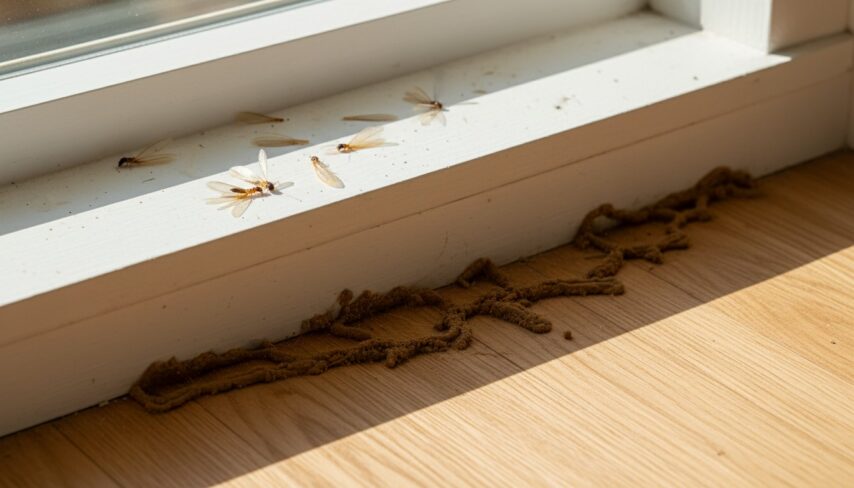
termites on window sill

Spotting winged termites (alates) is often the first visible sign that a reproductive colony exists within dispersal range of your home, and a professional inspection is usually recommended soon after. This guide helps you quickly identify swarmers and distinguish them from look‑alikes, explains seasonal timing by species and region, and walks you through immediate do’s and don’ts to preserve evidence.

You will also learn what a licensed inspector will check for, which treatment approaches are most common, and straightforward prevention steps you can implement right away. Clear examples, quotable facts, and action steps are included so you can act confidently if you encounter a swarm.

What termite swarmers are and why they matter

Alates are the winged reproductive caste produced by mature termite colonies to disperse, mate, and found new colonies, and seeing them usually signals a mature colony nearby. For background on what termite swarmers mean for homeowners, NC State Extension provides a helpful overview. Because termite colonies can slowly consume structural wood and cause costly damage, a swarmer sighting should be treated as an early warning and documented rather than ignored.

Collecting and preserving evidence, such as intact specimens and shed wings, makes identification and treatment recommendations far more accurate. “A single swarmer sighting commonly indicates there is at least one mature termite colony within dispersal distance of your home,” says Dr. Jordan Hale.

When swarm season occurs by species and region

Swarm timing varies by species and by local climate, so patterns you read for one region may not apply where you live. In temperate parts of the United States, subterranean termites most often swarm in spring after warm rain with daytime highs roughly between 60 and 80°F, while drywood termites typically swarm in late summer to early fall.

In coastal and subtropical areas swarms can begin earlier, recur multiple times, or occur outside classic windows, and some species such as Formosan subterranean termites are less constrained by narrow weather conditions. For the most specific timing check your local extension service because county‑level patterns can differ from statewide averages.

How to tell termite alates from flying ants and other look‑alikes

A few visual cues reliably distinguish termite alates from flying ants: termite antennae are straight and bead‑like while ants have elbowed antennae, termites show a broad, uniform waist versus the pinched waist of ants, and termites carry two pairs of equal‑length wings while flying ants have unequal front and rear wings.

Behavior and scene evidence also help: termite alates frequently shed their wings shortly after landing, leaving neat piles of identical wings, whereas discarded wings are less common with ants. Look for other clues such as fine, granular frass that points to drywood termites or mud tubes on foundations and wood‑to‑soil contact that indicate subterranean termites.

For documentation, capture intact specimens or take clear photos showing the antennae, waist and wing lengths, and save any wings in a sealed bag to speed accurate species identification.

Immediate do’s and don’ts when you spot swarmers

When you discover swarmers, prioritize preserving evidence and gathering clear context for the inspector rather than immediately trying to solve the problem yourself. Photograph the scene from multiple angles, include a close view of any wing piles or frass, and note the date, time and weather conditions to provide a complete record of the event.

Carefully collect intact specimens and wings in sealed bags and label them so the inspector can use them for species ID; avoid crushing specimens or vacuuming wing piles if possible. Do not apply DIY insecticides or seal potential entry points before a professional inspection because treatments or sealing can push termites deeper and make detection and treatment more difficult.

What a professional inspection involves

A licensed inspector will perform a methodical exterior and interior walkthrough, examining attics, crawlspaces, basements, and all wood‑to‑soil contact points while probing and sounding suspect wood. The inspector may use moisture meters, borescopes, flashlights and, in some cases, infrared or acoustic detection tools to locate concealed activity.

You should expect a written report that includes photos, an infestation map and, when possible, species identification. After the inspection you should receive clear recommendations and an explanation of any limitations of detection based on access or conditions in your home.

How treatments are chosen and what to expect

Treatment selection depends first on species identification and the infestation’s extent, and those two factors directly affect cost and the recommended method. For subterranean termites common approaches include liquid soil termiticides that create a treated barrier around the foundation and baiting systems that target colonies with slow‑acting bait.

Drywood infestations are often treated with localized injections, targeted heat, spot fumigation, or whole‑structure fumigation when galleries are widespread. Many providers pair treatment with monitoring, written warranties and scheduled re‑inspections, and you should always ask for several written estimates that detail the chemicals, methods and warranty terms. For a deeper look at treatment options, see our guide to termite extermination. “Treatment selection baiting, liquid barriers, localized injection, or fumigation depends first on species and infestation extent; accurate species ID directly affects cost and method,” notes Dr. Jordan Hale.

Preventing future swarms with maintenance and exclusion

Reducing moisture and limiting wood access are among the most effective preventive measures you can implement around your home to lower termite risk. Move firewood and lumber at least 20 to 30 feet from the house and keep it off the ground, ensure soil grades away from the foundation by at least six inches within the first ten feet, maintain gutters and downspouts, and repair leaks promptly to prevent persistent damp conditions.

Seal gaps around utility penetrations, address cracks in the foundation, and limit mulch thickness near the foundation to reduce direct wood contact and soil moisture near structural elements. During swarm season reduce outdoor lighting or switch to yellow “bug” lights and shield fixtures to lessen attraction, and consider annual professional inspections or semi‑annual checks for properties with prior termite history.

Common Questions

Are swarmers harmful to people or pets? No, alates do not bite or transmit disease, and they are not a direct health threat to you or your pets. Their significance is structural because they indicate reproductives and therefore the potential presence of colonies that can damage wood over time. Treat the sighting as a warning sign and document it for the inspector rather than worrying about immediate health effects.

How soon should you call an inspector after a sighting? Call a licensed inspector within 24 to 72 hours after documenting the sighting and preserving any specimens or photos, because earlier inspections can reduce the complexity and cost of treatment. Prompt scheduling also helps the inspector locate fresh evidence such as wing piles or recent mud tube activity that older sightings may no longer show.

Can you treat swarmers yourself? Killing visible swarmers provides only a short‑term visual fix and does not resolve colony‑level infestation, so DIY sprays are not an effective long‑term solution. Applying pesticides without proper identification and strategy can obscure evidence and complicate subsequent professional diagnosis and treatment. Contact a licensed professional for colony‑level treatment recommendations and follow their advice about preserving evidence and access before any control is attempted.

Will homeowner’s insurance cover termite damage? Most standard homeowners’ insurance policies exclude termite and other wood‑destroying organism damage, so termite damage is generally not covered as a typical peril. Review your policy carefully and ask your agent about any endorsements or separate coverage options that might apply in your area.

How long do treatment warranties usually last? Service agreements commonly provide warranties ranging from one to five years and often include scheduled re‑inspections or monitoring visits as part of the coverage. Carefully check the terms for what triggers retreatment, any actions that void the warranty, and whether the warranty covers structural repairs or only retreatment for ongoing termite activity.


What to do now and next steps

Do not disturb the scene if possible; instead, photograph wing piles, suspected entry points, and any frass or mud tubes while noting date, time and local weather. Collect intact specimens and wings in sealed containers or zip‑lock bags, label them with the location and time, and keep them refrigerated if you cannot get them to an inspector within a day or two.

Call a licensed termite inspector, describe the evidence clearly, and aim to schedule an inspection within 48 hours when practical so fresh indicators remain available for evaluation. If you observe obvious structural failure such as sagging floors or large voids, limit access to the affected area and follow the pest professional’s recommendation to consult a structural engineer.

After the inspection obtain two to three written treatment estimates that include species identification, proposed methods and warranty terms, and compare not only price but also monitoring and retreatment commitments. Implement immediate moisture‑control fixes such as stopping leaks, clearing gutters and reducing mulch depth while the inspection and any required treatments are scheduled. Keep a file with photos, inspection reports and treatment contracts, and plan for follow‑up checks according to the warranty schedule or sooner if you notice new activity.

References

Authoritative resources for termite identification, biology and management include the National Pest Management Association (pestworld.org), the U.S. Environmental Protection Agency guidance on termite control and fumigation (epa.gov/pesticides), USDA Forest Service materials on damage and species biology (fs.usda.gov), and state university extension publications such as the University of Florida IFAS Extension and University of California IPM. These organizations offer regionally specific fact sheets, identification keys and management guidance that can help you and your pest professional make informed decisions.

For county‑level timing and identification keys consult your state or local extension office because local patterns and dominant species often differ from national summaries. Keep copies of any extension or technical references used during inspection and treatment for future reference.

Pests Moving Indoors For Winter?

Connect with a local exterminator and protect your home fast.

(866) 470-1609

Available Next Day

No Obligation Assessment

Guaranteed Results