


Is Your Landscaping Inviting Pests? Mulch, Plants, and Yard Choices That Matter

Updated for 2026

Practical, exclusion-first landscaping steps to reduce pest pressure: maintain organic mulch at 2–3 inches (5–8 cm) and pull it 6–12 inches (15–30 cm) from foundations; schedule irrigation for early morning and ensure grading directs water away from the house at about a 5% slope; keep a 2–3 foot (0.6–0.9 m) clear zone of short turf or gravel next to foundations; elevate woodpiles 20–30 feet (6–9 m) from structures; and use measurable thresholds (e.g., dethatch when thatch >1/2 in) to share with contractors or neighbors.

gravel barrier

This article gives clear, evidence-based spring landscaping actions you can take to reduce pest pressure around your home. You will find specific, quotable metrics to use when you refresh beds and inspect foundations, practical plant- and water-management steps, and a concise monitoring checklist you can follow year after year. The guidance emphasizes exclusion and sanitation first, with repeatable numbers you can share with contractors or neighbors. Use these recommendations to prioritize low-cost, durable changes before considering chemical controls.

Quotable facts (quick highlights):
– Termites cause over $5 billion in U.S. property damage per year.
– Mosquitoes can breed in very small amounts of water sometimes just a few tablespoons.
– Mice can squeeze through openings about the size of a dime (≈1/4 in / 6 mm).

This guide walks you through mulch type and placement, plant selection and landscape design, moisture and irrigation best practices, hardscape and debris management, food-source reduction, lawn and edging practices, a seasonal monitoring checklist, and guidance on when to call a licensed professional. Each section explains why the topic matters for pests and gives actionable steps you can start using immediately. Where regional variation matters, the text points you to county extension and state resources so you can tailor the advice.

Mulch matters: type, depth, and placement

Mulch improves soil health and suppresses weeds, but it also changes moisture and shelter conditions that pests use, so you should balance horticultural benefits against pest risks.

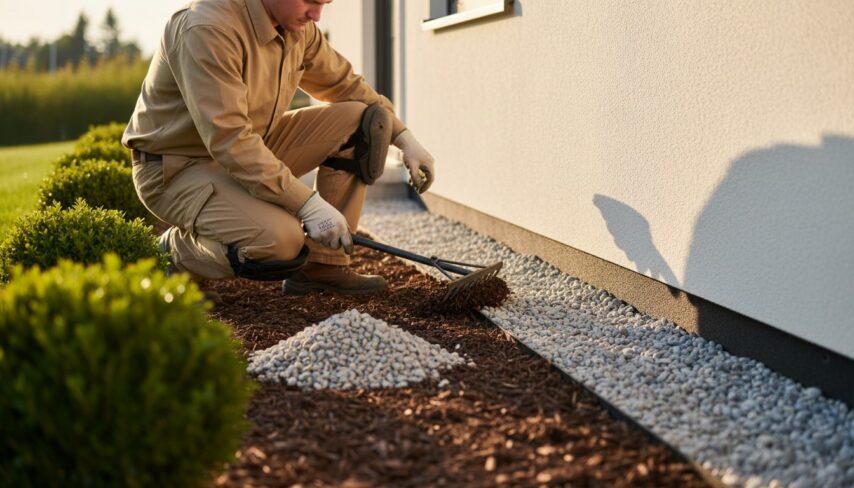
For most beds, keep organic mulch to about 2–3 inches (5–8 cm) deep and remove compacted old layers before adding fresh material so the bed dries faster between wet periods. Pull mulch back 6–12 inches (15–30 cm) from foundations and siding and, where termite risk is high, consider replacing organic mulch adjacent to foundations with inorganic materials such as pea gravel or crushed rock to create a less hospitable zone.

Finally, rake or aerate beds regularly to reduce continuous dampness that encourages ants, rodents, and fungus-feeding insects. If you notice early signs of lawn or garden damage, address them promptly before pests establish themselves.

Plant choices and landscape design — which plants attract pests (and which don’t)

Your plant choices and layout influence which pests will find your landscape attractive, so design with pest behavior in mind rather than planting for convenience alone. Nectar-rich ornamentals and large single-species blocks can support higher populations of aphids, scale, and the ants that tend them, while fruit trees naturally draw wasps and rodents during harvest periods.

To reduce pest pressure, diversify species, choose pest-resistant cultivars recommended by your local extension, and keep plants and groundcovers a few feet from the house where practical so you create a visible soil line around the foundation. Maintain a clear zone of about 2–3 feet (0.6–0.9 m) between dense plantings and siding and prune lower branches so you eliminate hidden corridors for rodents and crawling insects.

Water management and irrigation: how moisture controls pest pressure

Moisture is one of the strongest environmental drivers of pest presence, with mosquitoes, slugs, fungus gnats, centipedes, silverfish, and termites all correlating with standing or prolonged dampness.

Use irrigation methods that wet the root zone while minimizing surface wetness, such as drip lines or soaker hoses, and schedule watering early in the morning (roughly 4:00–8:00 AM) so foliage and mulch dry during the day. Check grading and downspout placement to make sure water moves away from foundations; a useful target is a slope of at least 5% away from the house (about a 6-inch drop over 10 feet).

Finally, eliminate small standing-water sources in containers, saucers, tarps, and toys to reduce local mosquito breeding with very little cost.

Structures, debris, and hardscape: remove hiding places and travel corridors

Objects left near the house become shelters and stepping-stones for pests, so move wood piles, pallets, and dense debris away from foundations and elevate stored wood off the ground. Inspect patios, crawlspace entrances, and areas where landscape timbers contact siding because those contacts create bridges for wood-destroying insects; use metal flashing or rigid edging where vegetation meets structural wood to limit contact.

Seal openings around pipes, vents, and foundation penetrations since mice can enter through surprisingly small holes, and repair any damaged screening or weather stripping to reduce shelter and entry opportunities. Where termite risk is elevated, review our termite removal guide for additional exclusion steps. Taking these exclusion steps often provides the most durable pest reduction for the least ongoing effort.

Managing food sources: compost, bird feeders, and attractants

Easy food sources greatly increase the carrying capacity of your yard for rodents, raccoons, opossums, and foraging insects, so reduce attractants by composting in sealed bins or tumblers, picking up fallen fruit promptly, and cleaning under bird feeders regularly.

Place feeders over gravel or concrete where practical, remove or restrict feeding at night in areas with high rodent activity, and store pet food indoors to avoid creating predictable food patches. Secure trash with tight lids and maintain neighborhood-level sanitation because nearby yards that leave food and debris will continue to attract pests close to your property.

Regularly auditing likely food sources is a simple habit that reduces repeated visits by wildlife and commensal pests.

Lawn, edging, and groundcover: small choices that reduce pest habitat

Turf and groundcover choices change microhabitats that favor ticks, fleas, and small mammals, so manage turf structure as part of your pest plan rather than treating it as purely cosmetic. Remove excess thatch when it exceeds roughly 1/2 inch (about 1.3 cm) because thick thatch creates cool, moist layers that shelter ticks and flea hosts.

Near foundations, keep a band of short grass, gravel, or rock for 2–3 feet (0.6–0.9 m) to reduce cover for rodents and limit tick habitat, and use physical edging like steel or concrete to break continuous vegetation pathways. Inspect turf for grub damage in early spring according to local extension timing and adjust mowing and edging to reduce pest-friendly microclimates.

Monitoring, seasonal checklist, and when to call a professional

An integrated pest management approach begins with monitoring and identification, then emphasizes exclusion and sanitation before considering chemical or other controls, so start each season with a focused inspection around foundations and entry points.

Look for mud tubes or damp spots on foundations, pull mulch back from siding, test irrigation and gutters, and reposition firewood and debris away from structures as needed. Place monitoring traps or boxes where rodents or other pests have been seen and log activity to detect trends; if exclusion and sanitation do not resolve the problem, move to targeted, least-toxic controls.

Call a licensed pest-management professional promptly if you find visible termite mud tubes, active structural wood damage, clear rodent entry into living spaces or attics, or large wasp nests close to primary entryways.

Quick-reference rules and action items

Keep a short, measurable list you can share with landscapers or neighbors: maintain mulch at 2–3 inches (5–8 cm) depth and a mulch-free perimeter of 6–12 inches (15–30 cm) from siding, place woodpiles 20–30 feet (6–9 m) from structures and elevate them, and schedule irrigation for early morning while ensuring grading directs water away from foundations at about a 5% slope.

Dethatch turf when layers exceed roughly 1/2 inch and maintain a 2–3 foot buffer of short turf or rock along foundations to reduce rodent and tick cover. Use these simple metrics as repeatable checks during seasonal maintenance and supplement them with local extension guidance when regional pests or microclimates require modification.

Resources and references

Authoritative resources that support these recommendations include national pest and public-health agencies, professional associations, and university extension services. Consult sources such as the National Pest Management Association for termite prevention, the Centers for Disease Control and Prevention for mosquito and rodent prevention, and EPA WaterSense or local extension irrigation guidance for watering practices.

University and county extension services provide region-specific recommendations for mulch selection, plant choices, grub lifecycle timing, and local pest management strategies. When timing or species-level actions matter such as grub treatment windows or termite species distributions check your county extension or state agency for the most current, locally relevant guidance.

Pests Moving Indoors For Winter?

Connect with a local exterminator and protect your home fast.

(866) 470-1609

Available Next Day

No Obligation Assessment

Guaranteed Results