


Christmas Tree Pests: Tiny Hitchhikers That Come Indoors With Holiday Décor

Updated for 2025

Cut Christmas trees often carry overwintering insects such as adelgids, aphids, bark beetles, spiders, and mantis egg cases. Warm indoor conditions trigger activity, but these species cannot infest homes or survive long without outdoor conifer hosts. Inspection and simple IPM techniques resolve most cases.

Bugs on Christmas Tree

Christmas Tree Pests Indoors

The insects that come indoors on Christmas trees are almost always species that overwinter quietly on conifers outside. Once a cut tree enters a warm living room, the change in temperature signals early spring. Eggs that stayed dormant in the cold begin to hatch, nymphs start moving, and adults that barely stirred outdoors begin wandering toward light. You rarely expect that kind of activity from a fresh holiday tree, yet in my years inspecting homes during December, I have seen how quickly a few unnoticed insects turn into a small flurry of movement once the room warms up.

Evergreens sold across the United States vary by species and growing region, and each supports its own community of insects. Douglas firs, spruces, pines, and Fraser firs are grown at high elevations where temperatures routinely dip well below freezing. The insects on these trees evolved to survive months of cold. Indoors, they lose their footing almost immediately because the cut tree provides no ongoing food or shelter. Even so, when they show up on ornaments or tree skirts, you feel their presence quickly. Understanding what they are and why they emerge helps you manage them without turning the season upside down.

Adelgids On Christmas Trees

Adelgids are among the easiest insects to spot because they form small cotton like patches along needles or twig tips. Those patches are waxy coverings that protect overwintering nymphs. Outdoors, they stay immobile through the coldest months. Once they are brought inside, they respond to the warmth by crawling short distances along the branch.

On Fraser firs, you usually see them along the outer needles where the light exposes their white wax. They do not bite and do not damage indoor surfaces. They also cannot survive on houseplants unless those plants are conifers. Their presence is cosmetic, though noticeable. Homeowners often contact me after spotting what they assume is flocking or fungus near the lights.

A firm shake outside removes most adelgids before the tree ever reaches the stand. Any that remain are easily vacuumed once they leave the tree.

Aphids And Tree Feeding Species

Aphids appear frequently on Christmas trees, especially the larger species in the genus Cinara. These insects shelter deep in bark crevices on pines and firs during winter. Indoors, they begin to feed again. Their size surprises people, since some adults reach a quarter of an inch long. They appear dark, glossy, and slightly elongated with long legs and antennae.

You may notice sticky spots on ornaments or flooring near the tree. That residue is honeydew produced during feeding. It is often the first sign that aphids have resumed activity. I have walked into homes where homeowners assumed sap was leaking from the tree until a closer look revealed clusters of Cinara aphids near the trunk.

Aphids on cut trees do not persist. Without sap flow, they run out of nutrition quickly. Vacuuming removes them effectively. The Environmental Protection Agency, U.S. Environmental Protection Agency, reminds homeowners to use only products labeled for indoor ornamental use when treating a live tree, which excludes nearly all outdoor conifer sprays.

Bark Beetles And Wood Boring Species

Bark beetles and similar borers sometimes emerge from the trunk of a Christmas tree. Their life cycle takes place beneath bark outdoors, and by the time the tree is harvested, the beetles are usually near adulthood. Indoors, you may see a few exit through small round holes. They leave behind a fine reddish or tan powder called frass.

Homeowners often assume these beetles could spread into structural lumber or furniture. They cannot. Structural wood in homes is kiln dried, processed, and unsuitable for bark beetle development. Cooperative extensions across the country have shown that beetles associated with cut conifers cannot establish indoors.

When beetles exit the tree, vacuuming resolves the issue quickly. Inspecting the trunk for exit holes before bringing the tree inside helps reduce surprises. Keeping the tree cool until setup slows insect emergence as well.

Spiders, Mites, And Accidental Arthropods

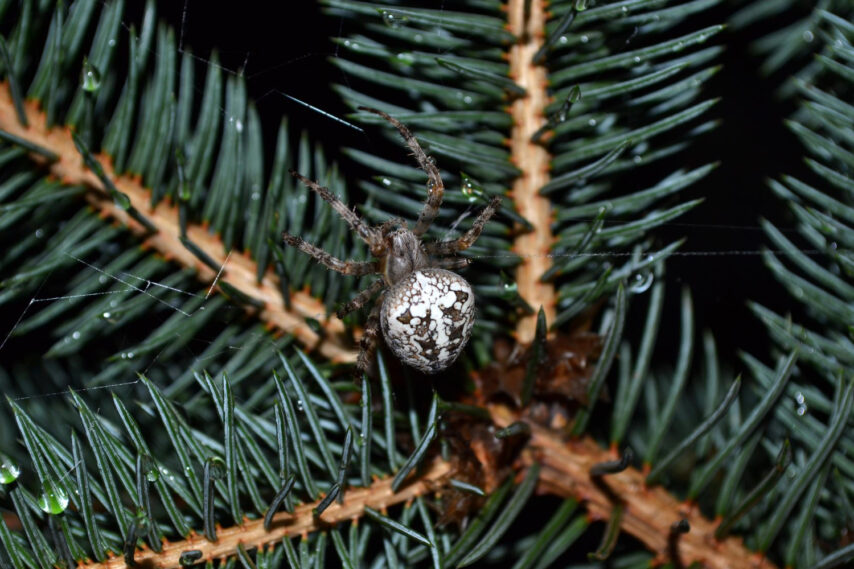
Many arthropods found on Christmas trees do not feed on the tree at all. Spiders frequently overwinter among evergreen branches. Indoors, they move toward windows or warm corners. They are not dangerous and do not indicate a larger problem. If you need more detail on managing household spiders, see spider control indoors.

Predatory mites and springtails also appear on occasion. Mites stay tucked near the base of needles. Springtails favor moisture, so they sometimes hop off the tree if they locate humid areas near sinks or potted plants. These insects are incidental hitchhikers that do not survive long inside. A quick pass with a vacuum or a wipe with a cloth removes them easily.

Praying Mantises And Egg Cases

A praying mantis egg case, called an ootheca, is one of the more dramatic surprises homeowners encounter. These tan, foam like cases contain dozens of developing nymphs. Outdoors, the eggs stay dormant until spring. Indoors, the warmth can trigger hatching within days.

When the nymphs emerge, they disperse across branches and toward light sources. They are harmless and short lived indoors. Remove the egg case and place it outdoors on a shrub or tree so the nymphs can continue developing naturally.

Psocids And Moisture Driven Pests

Psocids, commonly called booklice, favor damp environments. They feed on microscopic molds and organic residues rather than wood or foliage. If a tree was stored in a humid garage or wrapped before fully drying, psocids can become active on the bark. Indoors, they sometimes move toward humid window frames or baseboards.

They indicate moisture rather than structural concerns. Lowering indoor humidity below 50 percent reduces their activity. Vacuuming removes individuals quickly and stopping excess moisture near the tree prevents them from returning.

Pre Purchase Inspection And Selection

Inspecting a tree before purchase prevents most insect issues. Look for fine dust around the trunk, white flecks on needles, or clusters of insects near inner branches. A quick shake often reveals hidden debris. Many sellers provide mechanical shaking, which removes much of the material that would otherwise fall indoors. I see a marked difference in trees that go through this step, especially with aphids and loose bark fragments.

At Home Inspection Before Bringing The Tree Inside

Once home, unbag the tree outdoors and shake it firmly. This dislodges insects that remained hidden during transport. Use a flashlight to inspect branch intersections where overwintering insects shelter. If you notice a mantis egg case or a cluster of aphids, prune that branch.

Letting the tree sit outdoors briefly before bringing it inside reduces the sudden temperature shock that triggers rapid insect emergence. It also gives you a chance to monitor for additional movement.

Indoor Prevention And Control

Integrated Pest Management begins with simple physical control: vacuuming, wiping surfaces, and monitoring activity. Those steps resolve nearly all Christmas tree insect concerns. A hose attachment helps remove insects from the trunk or floor. Tape works well for small insects found on windows.

Managing indoor humidity limits activity from moisture loving insects. Cleaning up water spills from the tree stand immediately prevents springtails and psocids from gathering. If insects continue appearing despite these efforts, removing the tree is often the most straightforward solution. Cold outdoor temperatures halt their development within hours.

Tree Disposal And Preventing Repeat Issues

After the holiday season, move the tree outdoors rather than allowing it to dry inside. As bark dries, it sheds material that occasionally contains eggs or frass. Clean the area where the tree stood to remove residues.

If you use a live, potted Christmas tree, check the soil for signs of fungus gnats. These insects develop in wet potting mixes. Allowing the top inch of soil to dry slightly between waterings helps reduce activity.

By managing the tree responsibly from purchase to disposal, you limit opportunities for insects to linger indoors.

When To Call A Pest Control Professional

Most holiday tree insects are harmless and short lived. Still, if you notice insects spreading beyond the tree or you are unsure what species you are seeing, a licensed professional can provide clarity. I occasionally inspect trees that carry unusually dense aphid populations or scale insects that persist longer than expected. Those situations benefit from professional evaluation.

A pest control provider can also confirm that any wood borers present are confined to the cut tree and not a risk to your home. At Pests.org, we routinely connect homeowners with local professionals who understand the seasonal nature of these holiday concerns.

Seeing Pests On Your Christmas Tree?

Connect with a local exterminator and protect your home fast.

(866) 470-1609

Available Next Day

No Obligation Assessment

Guaranteed Results