


Carpenter Bees Are Back: How to Protect Your Deck, Fascia, and Outdoor Wood

Updated for 2026

Act quickly if you find smooth, 10–15 mm entrance holes or large glossy black bees on wood trim: inspect at dawn or dusk and monitor suspected entrances for 2–3 days to confirm activity before sealing. For active galleries, inject a labeled insecticidal dust at night, then plug inactive holes with stainless steel wool and seal with exterior caulk or filler. Prevent reinfestation by finishing or replacing exposed wood, using borate treatments or metal flashing in high‑risk areas, and call a professional when load‑bearing members show multiple galleries, infestations recur annually, or you prefer certified repair and warranties.

carpenter bee damage

If you spot smooth, circular holes about 10–15 mm (0.4–0.6 inch) across or large, glossy black bees near your wood trim, act quickly to limit longer-term damage. Begin by inspecting at dawn or dusk and monitor suspected entrances for two to three days to confirm activity before sealing; this prevents trapping active adults and forcing them to bore new exits.

For active galleries, apply a labeled insecticidal dust into the tunnel at night, then plug inactive holes with stainless steel wool followed by exterior-grade caulk or filler; for prevention, finish or replace exposed wood and consider borate treatment or metal flashing in high-risk spots. Call a professional when load-bearing members show multiple galleries, when infestations recur annually, or if you are uncomfortable with insecticides or structural repairs.

Quick factual highlights to remember

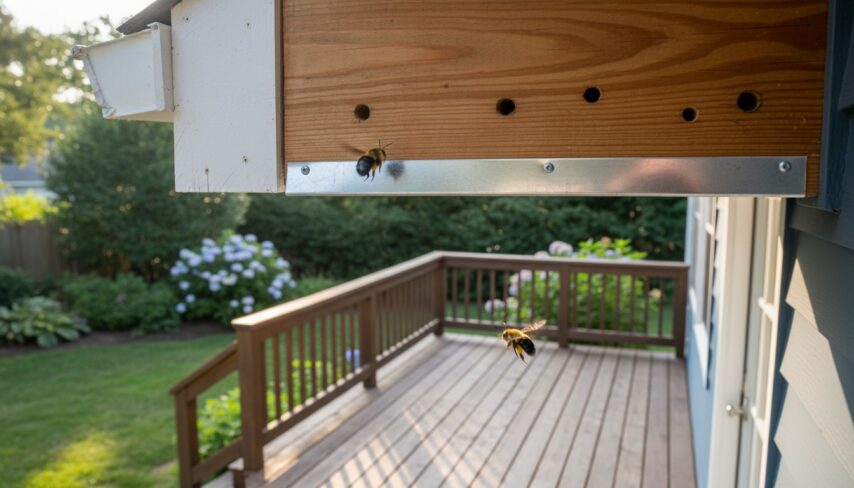
Carpenter bee entrance holes are smooth, round, and typically 10–15 mm in diameter, and galleries most commonly run roughly perpendicular to the grain; tunnels often extend 6–12 inches in a first season and can lengthen if reused.

Adult behavior gives useful clues: males hover and patrol near nest sites but cannot sting, while females can sting if handled or squeezed; fresh frass consisting of fine wood particles below holes is a reliable sign of active tunneling. Distinguish carpenter-bee damage from other causes by noting that woodpecker holes are irregular and rough, and most beetle exit holes are much smaller than carpenter-bee entrances.

How to identify carpenter bees (field signs you can trust)

Carpenter bees are robust insects roughly three-quarters to one inch long and frequently have a glossy black abdomen with paler or yellowish facial markings; males tend to look paler and will hover defensively near nest sites.

The most reliable sign on wood is a smooth, round entrance hole about 10–15 mm across with clean edges rather than the ragged chewing typical of other pests. Active galleries often produce fresh frass beneath entrances or on nearby surfaces, and tunnels usually run perpendicular to the grain and extend several inches in the first season.

Use these visual cues and brief observation at dawn or dusk to confirm whether an individual hole is active before you intervene.

Assessing risk to your deck, fascia, and eaves

Start by evaluating both the location and the number of galleries to determine whether the damage is cosmetic or structural because a single isolated hole in non-load-bearing trim is often a cosmetic problem, while clusters of holes on the same board or in heavily weathered softwood raise concern.

Structural risk increases when joists, posts, fascia, or other load-bearing members show multiple tunnels or a visibly reduced cross-section, or when the wood is soft and crumbling. For cosmetic cases you can usually seal and refinish the affected area, whereas moderate cases typically require targeted gallery treatment followed by refinishing or replacement of exposed members.

When in doubt about load-bearing capacity or if you see recurring galleries in the same member, plan for reinforcement or replacement and consult qualified carpentry and pest-control professionals.

Immediate, safe steps for active and inactive galleries

When you inspect, choose dawn or dusk because adults are least active at those times, and monitor suspected holes for two to three days before sealing to confirm inactivity; this simple waiting step prevents trapping live bees inside.

Use basic personal protective equipment such as long sleeves, gloves, and eye protection, and keep children and pets away while you work near galleries because even non-stinging males can alarm or provoke reactions. If a gallery is inactive, pack the entrance firmly with stainless steel wool, seal with exterior caulk, wood putty, or epoxy, then sand and repaint or restain the area to protect the repair.

If galleries are active, apply a labeled insecticidal dust directly into the tunnel at night using a bulb duster and follow label directions and re-entry intervals; re-check 24–48 hours after treatment and only plug entrances once no activity is observed.

DIY vs. professional approaches and what works best

Targeting galleries first is the most effective strategy because insecticidal dusts labeled for carpenter bees reach adults and larvae inside tunnels and are the most reliable DIY application when used at night with a bulb duster and proper protective gear.

Surface residual sprays and aerosol foams can reduce adult activity on exposed surfaces but usually do not penetrate deep galleries, so they work best as complements to gallery-injected dust rather than as stand-alone fixes. Natural repellents such as citrus or almond oil may provide a short-term deterrent but are not dependable long-term, so rely on proven mechanical exclusion and preservative treatments for prevention.

Hire a professional when multiple load-bearing members are affected, infestations recur annually, or when you want exclusion, structural warranties, or specialized equipment; professionals map galleries, use targeted injectors, and coordinate repairs to reduce the chance of reinfestation.

Long-term prevention and maintenance schedules that work

Finishing exposed wood with a primer plus paint or a high-quality exterior stain/sealer is one of the most effective long-term defenses because it denies females an easy surface in which to begin galleries; recoat intervals generally fall between two and five years depending on sun exposure and moisture.

Consider upgrading high-risk trim to pressure-treated lumber, composite or PVC trim, or hardwoods, and install metal flashing or aluminum trim on eaves, fascia ends, and beam ends where bees commonly nest. Borate preservatives applied to new or replacement lumber deter insects and decay when used according to product labels and local regulations, and they work best when applied before installation and before finishing.

Add an annual spring inspection to your home-maintenance calendar to check for new holes and hovering males, and follow up in the fall if problems recur after treatment.

Repairing damage: rom cosmetic fixes to structural replacement

For small cosmetic repairs, first confirm galleries are inactive by monitoring for a few days, then pack the entrance with stainless steel wool, fill with exterior-grade wood filler or epoxy, sand smooth, and prime and paint or restain the area; most modest repairs can be completed in a weekend for reasonable materials cost.

Structural repairs are appropriate when the wood is soft, crumbling, or when a member’s load-bearing capacity is compromised, and common fixes include sistering a new joist to a compromised one, using metal connectors or brackets for posts, or replacing severely damaged fascia or posts. When you replace wood, apply borate preservatives before installation and painting per product instructions to reduce the chance of reinfestation.

For significant or load-bearing work, obtain two to three contractor quotes and verify that carpentry and pest-control tasks are coordinated and included in the written estimate.

When to call a professional

Contact a licensed pest-control or carpentry professional if multiple galleries are present in load-bearing members, if infestations return annually despite treatment, if you are uncomfortable handling insecticides or performing structural repairs, or if you want a documented integrated pest management plan and warranty.

Professionals typically inspect and map galleries, apply targeted dusts with specialized equipment, perform exclusion and sealing, coordinate carpentry repairs, and schedule follow-up inspections often timed for spring activity. When evaluating contractors, ask which products and methods will be used and request labels or active ingredients, whether follow-up inspections and warranties are provided, and whether carpentry repairs are included or subcontracted. Get a written estimate and treatment plan before work begins to ensure responsibilities and timelines are clear.

Regional timing and monitoring

Peak adult activity in temperate North America is generally March through May, so plan inspections and monitoring during that window and add an annual spring check to your routine maintenance.

Apply labeled insecticidal dusts at dusk or dawn during the active season when adults are most likely to be inside galleries, and re-check entrances 24–48 hours after treatment before sealing to confirm effectiveness. In colder or milder climates the timing may shift slightly, so consult local extension guidance for region-specific peak activity and monitoring reminders.

References and further reading you can trust

Authoritative sources for identification and control include university extension materials and federal guidance: Penn State Extension’s Carpenter Bees, UC Integrated Pest Management’s Carpenter Bees guidance, and University of Minnesota Extension’s Carpenter Bees resource provide regionally relevant identification and management advice; the EPA’s pesticide labels and safety pages explain legal label requirements and safe pesticide use; the USDA Forest Products Laboratory offers practical guidance on wood preservation and borate use; and market sites such as HomeAdvisor/Angi provide typical cost ranges for carpenter-bee removal and repairs.

Pests Moving Indoors For Winter?

Connect with a local exterminator and protect your home fast.

(866) 470-1609

Available Next Day

No Obligation Assessment

Guaranteed Results